
September 15, 2026
Summer can be hard on your roof. Months of intense heat, humidity, and rain can leave behind damage that isn't always obvious from the ground. As we transition fully into fall, it's a good time to look over your roofing system and address any concerns before cooler temperatures arrive.
An end-of-summer roof inspection can help you identify damaged shingles, clogged gutters, deteriorated flashing, and other issues that may need attention. Here's what to include in your roof checklist.
Check Your Shingles for Damage
Start by looking over your shingles from the ground. You may be able to spot signs of damage without climbing onto the roof.
Look for shingles that are:
- Missing or out of place
- Cracked, curled, or buckled
- Lifting along the edges
- Losing large amounts of granules
- Covered with moss or algae
- Discolored in isolated areas
Summer thunderstorms can damage shingles through high winds, hail, or falling branches. If you notice something unusual, have a roofing professional take a closer look rather than walking across the roof yourself.
Inspect Flashing and Roof Penetrations
Flashing helps direct water away from vulnerable areas around chimneys, vents, skylights, walls, and other roof penetrations. Damaged or loose flashing can create openings where water can enter your home.
Look for flashing that appears loose, bent, rusted, or separated from surrounding roofing materials. You can also check exposed sealant for cracking or deterioration.
Clean and Inspect Your Gutters
Your gutters need to drain properly to move rainwater away from your roof and foundation. Leaves, twigs, shingle granules, and other debris can collect in gutters throughout the year and restrict water flow.
As part of your end-of-summer roof maintenance, clear out accumulated debris and check for sagging sections, separated seams, or loose fasteners. Make sure your downspouts are also clear and direct water away from the foundation.
Look for Signs of Water Damage
Some roofing problems are easier to identify inside your home. Check ceilings, upper-floor walls, and attic spaces for signs that water may have entered the roofing system.
Watch for:
- Brown or yellow ceiling stains
- Peeling paint
- Damp insulation
- Discolored or deteriorating wood
- Musty odors
- Visible moisture
If you find evidence of a leak, don't assume the source is directly above the affected area. Water can travel along decking and other building materials before becoming visible inside your home. A professional inspection can help identify where the water is actually entering.
Check for Algae, Moss, and Black Streaks
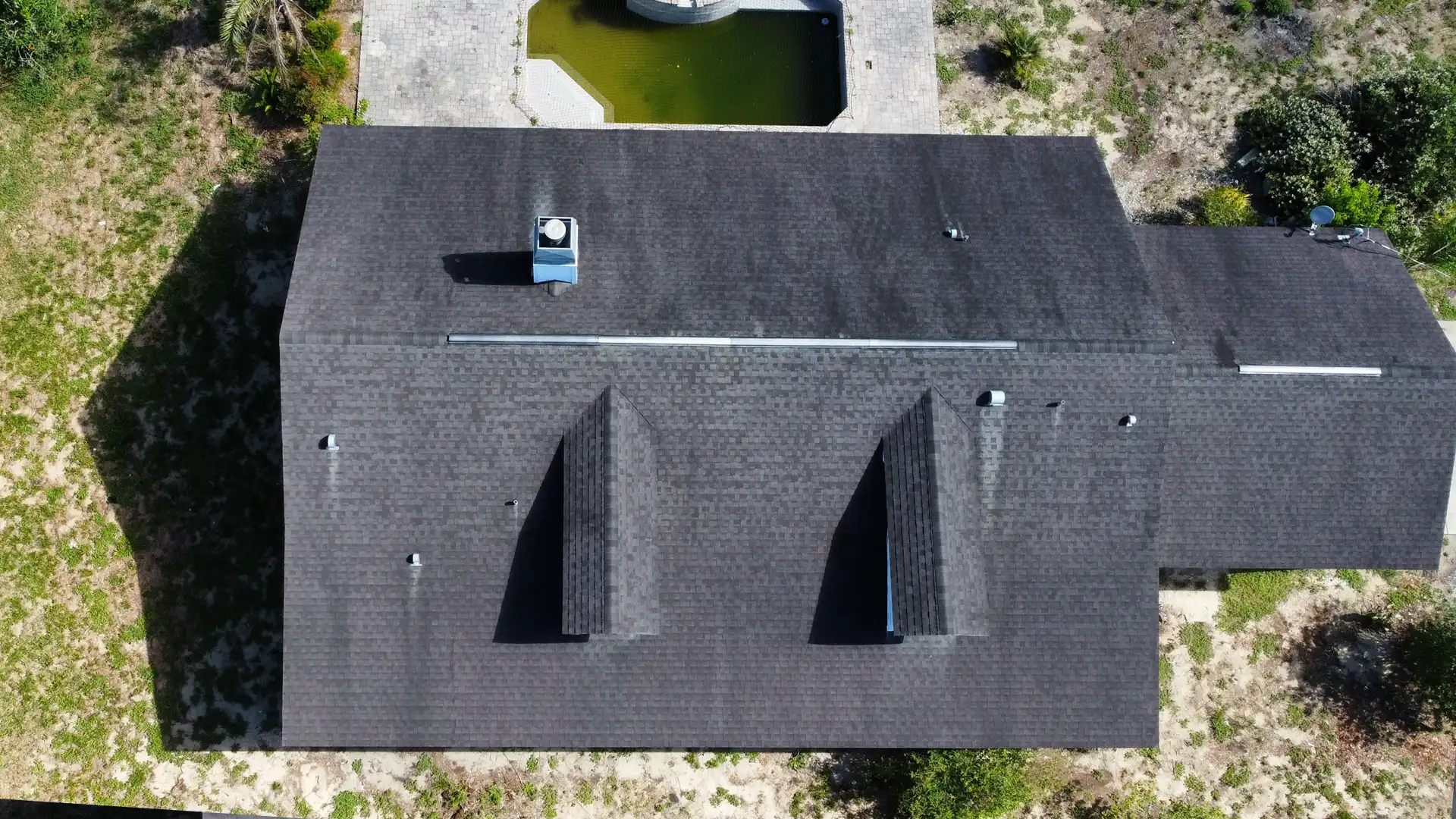
The Southeast's warm, humid conditions can encourage algae and moss growth on roofing materials. Black streaks on asphalt shingles are often associated with algae and may become more noticeable as the roof ages.
Some discoloration is primarily cosmetic, but significant organic growth deserves attention. Moss can retain moisture against roofing materials, potentially contributing to deterioration over time.
Avoid pressure washing or using harsh cleaning products on your shingles. These methods can damage roofing materials. If your roof has substantial algae or moss growth, ask a roofing professional about appropriate cleaning and maintenance options.
Inspect Your Attic Ventilation
Inspecting your roof also means checking what is happening underneath it. Your attic ventilation helps regulate heat and moisture, both of which can affect the performance of your roofing system.
Look for excessive heat, condensation, damp insulation, musty odors, or signs of moisture. These conditions may indicate ventilation or insulation problems that deserve further evaluation.
Proper attic airflow can help your roofing system handle seasonal temperature changes while supporting the condition of the materials inside your attic.
Check for Summer Storm Damage
Think back over the summer and consider whether your home experienced severe thunderstorms, high winds, hail, or falling debris. Even when there isn't an obvious leak, a storm can leave behind damaged shingles, flashing, gutters, or other roofing components.
Look around your property for fallen branches and other signs of impact. If you aren't sure whether your roof sustained damage, a professional inspection can provide a closer evaluation.
It's particularly worthwhile to schedule an inspection after a significant storm rather than assuming your roof is fine because you don't see water inside your home.
Don’t Put Off Roof Repairs
After completing your end-of-summer roof inspection checklist, don't ignore problems simply because they aren't causing a leak yet. Damaged shingles, deteriorating flashing, and drainage problems can become more serious with continued exposure to rain and wind.
Depending on the condition of your roof, maintenance may include replacing damaged shingles, repairing flashing, clearing drainage systems, addressing ventilation concerns, or making other targeted repairs.
If your roof is older or showing widespread deterioration, an inspection can also help you determine whether repairs are appropriate or whether replacement should be considered.
Ensure Your Roof Is in Peak Condition With Alpha Omega Construction Group
By the end of summer, your roof has spent months dealing with heat, humidity, rain, and severe weather. Before fall gets fully underway, Alpha Omega Construction Group can help you determine whether those conditions left behind damage or areas that need attention.
Our team provides roof inspections, maintenance, repairs, and replacements for homeowners throughout the Southeast. We can evaluate the parts of your roofing system that aren't always easy to assess from the ground, including shingles, flashing, drainage, ventilation, and other components.
Schedule a roof inspection with Alpha Omega Construction Group today and make sure your roof is in ideal condition.
Trusted by some of the biggest names in the business!


