
September 15, 2026
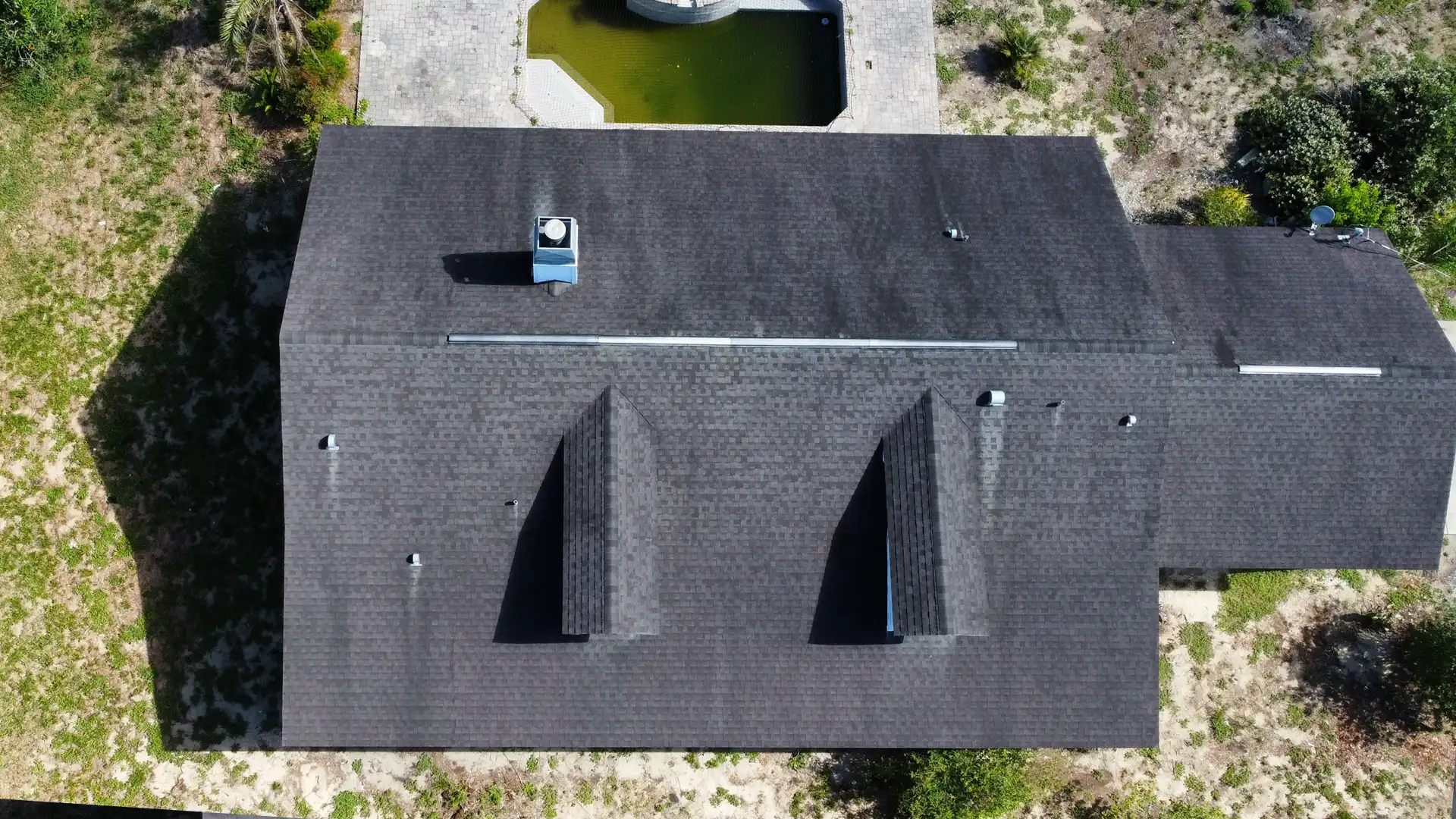
If you've noticed dark or black streaks running down your roof shingles, you're not alone. This discoloration is common on asphalt shingle roofs, particularly in warm, humid areas like the Southeast. While black streaks can make a roof look older than it is, they aren't necessarily a sign that the shingles are failing.
In many cases, the streaks are caused by algae growing on the surface of the shingles. However, that doesn't mean the issue should simply be ignored. Understanding what causes roof algae, how it affects shingles, and what you can do to protect your roof can help you decide when cleaning or a professional inspection is appropriate.
What Causes Black Streaks on Roof Shingles?
The dark streaks that appear on asphalt shingles are commonly associated with a type of algae called Gloeocapsa magma. This algae thrives in warm, humid conditions and can spread across areas of a roof that stay damp for extended periods.
Algae spores can be carried by wind and settle on roofing materials. Once moisture and other favorable conditions are present, the algae can grow and create the dark discoloration that becomes visible from the ground.
Roofs with limited sunlight or areas shaded by trees can be particularly susceptible because moisture takes longer to evaporate. Poor roof drainage, nearby vegetation, and the Southeast's naturally humid climate can also create conditions that encourage algae growth.
Is Algae on Roof Shingles Harmful?
In many cases, the black streaks themselves are primarily a cosmetic concern. Algae growth does not automatically mean that your shingles need to be replaced.
However, significant buildup should not be dismissed. Algae can retain moisture on the surface of the shingles, and persistent moisture can contribute to conditions that accelerate wear. If your roof already has aging, damaged, or deteriorating shingles, additional moisture exposure may compound existing problems.
Black streaks can also make it harder to distinguish normal aging from other forms of roof damage. If discoloration is accompanied by curling shingles, missing granules, cracked materials, or other visible problems, a professional evaluation can help determine whether more than algae is affecting the roof.
Why Are Some Parts of the Roof More Affected?
You may notice that black streaks appear more heavily on one side of your roof than another. This is usually related to differences in sunlight and moisture.
Roof sections that receive less direct sunlight tend to stay damp longer, creating more favorable conditions for algae. Overhanging trees can have a similar effect by blocking sunlight and allowing leaves and other debris to accumulate on the shingles.
You may also see streaking below areas where water regularly runs across the roof. Gutters, roof valleys, and other areas where moisture collects can develop more noticeable discoloration.
How to Clean Roof Shingles
Roof shingles should be cleaned with a method that removes buildup without damaging the roofing material. For asphalt shingles, a roof-safe cleaning solution can be applied to the affected areas and allowed to sit for the recommended amount of time. The loosened growth can then be rinsed away gently.
Avoid pressure washing or aggressive scrubbing. The force of a pressure washer can remove the protective granules from asphalt shingles, while stiff brushes can damage the shingle surface. Harsh cleaning products may also cause damage to the roof or surrounding landscaping.
If you plan to clean your roof yourself, follow the shingle manufacturer's cleaning recommendations and use products specifically designed for your roofing material. For significant buildup or hard-to-reach areas, professional roof cleaning can remove the growth while reducing the risk of damaging the shingles.
Roof safety should also be considered. Wet shingles can become extremely slippery, and climbing onto a steep roof creates a serious fall hazard. If you cannot safely access the affected areas, leave the cleaning to a professional.
Can Black Streaks Be Prevented?
You may not be able to completely prevent algae from appearing, especially in a warm, humid climate, but you can reduce the conditions that encourage it.
A few steps can help keep your roof cleaner:
- Keep gutters and downspouts clear so rainwater can drain properly.
- Trim branches that hang directly over your roof and block sunlight.
- Remove leaves and other debris that remain on the shingles.
- Keep an eye on areas where water tends to collect.
- Have your roof inspected periodically, particularly as it gets older.
- Consider algae-resistant shingles when it's time for a roof replacement.
Good roof maintenance won't eliminate every algae spore, but it can help limit moisture and debris that contribute to roof discoloration.
Do Black Streaks Mean You Need a New Roof?
Not necessarily. The presence of algae alone isn't a reliable reason to replace a roof that's otherwise in good condition.
The age and overall condition of your roofing system are more important considerations. If the shingles are still performing well and don't show significant deterioration, cleaning or routine maintenance may be all that's needed.
On the other hand, black streaks combined with widespread granule loss, curling, cracking, missing shingles, leaks, or other signs of deterioration may indicate that your roof is nearing the end of its service life.
A professional inspection can help separate a cosmetic issue from a larger roofing problem. Rather than assuming that dark streaks mean your roof needs to be replaced, it's better to have the condition of the shingles and other roofing components evaluated.
Protect Your Roof From Algae and Southeast Weather
Black streaks may start as a cosmetic annoyance, but they're also a good reminder to pay attention to your roof. Alpha Omega Construction Group can help you determine what's behind the discoloration and whether your roof needs cleaning, maintenance, repairs, or replacement. We'll evaluate your roofing system, identify any underlying concerns, and explain your options based on what your roof actually needs. Contact our team today to schedule a professional roof inspection.
Trusted by some of the biggest names in the business!


